Peptide Batch Traceability: How Vials Link to Reports
By Blogr ·

Peptide batch traceability is the ability to follow one physical vial, through its batch ID, to the test report. If the number on the label matches the number on the certificate of analysis, and that same number appears on the vendor's listing page, the batch is traceable. If any link in that chain is missing or mismatched, it isn't, no matter how polished the paperwork looks.
That definition sounds simple. In practice, most buyers have never been shown what to actually check. They see letters and numbers on a label, assume it means something, and move on. The difference between a traceable listing and an untraceable one is usually visible in under two minutes, once you know where to look.
What Peptide Batch Traceability Actually Is
Batch traceability is a documentation property, not a chemistry test. It answers one question: can a specific vial be tied back to a specific, verifiable test result?
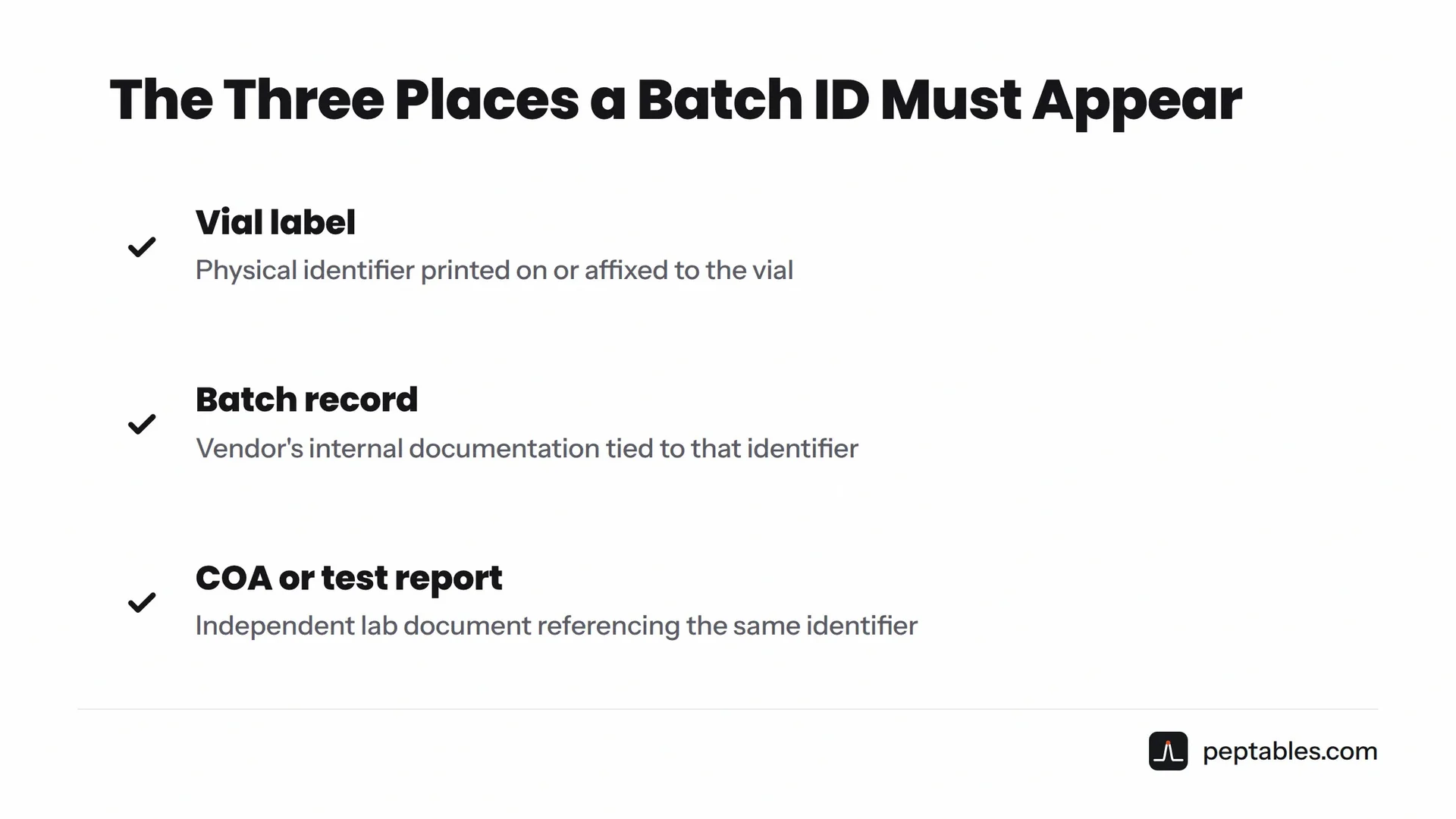
That requires an identifier called a batch number or lot number. This identifier must appear consistently in three places: the physical vial label, the batch record the vendor keeps internally, and the certificate of analysis (COA) or third-party lab report generated for that production run.
This matters more than it might seem at first glance. A peptide listing can carry a professional-looking COA and still tell you nothing about the vial in your hand if there's no identifier connecting the two. Research buyers rely on traceability to confirm that a document describes the product they received, not a different batch, an older batch, or a batch from a different supplier. Vendor-due-diligence reviewers use the same logic to separate suppliers who document their process from suppliers who publish paperwork as window dressing.
In one sentence: Peptide batch traceability exists when the batch ID on a vial label, the batch record behind it, and the published COA all reference the same identifier, so a buyer can confirm the test report actually belongs to that vial.
This page focuses narrowly on the identifier chain itself. Questions about batch terminology, vendor audits, and COA authenticity are covered separately.
The Chain: Label to Batch ID to Test Report
Traceability works like a chain with four links. Break any one of them and the chain stops functioning, even if the other three look intact.
- Vial label - the physical label printed on or affixed to the vial
- Batch ID / batch number - the specific identifier printed on that label
- Batch record - the vendor's internal record tied to that identifier
- Certificate of analysis (COA) / test report - the independent lab document referencing that same identifier
The Vial Label
The vial label is the first and most physical link in the chain. A well-documented label includes a product name, batch ID or lot number, and often a manufacture date. The batch ID is the detail that matters most for traceability. Everything else is context; the batch ID is the key that unlocks the rest of the chain.
The Batch ID / Batch Number
The batch ID (also called batch number or lot number) is a short alphanumeric code assigned to one specific production run. Every vial filled from that run carries the same code. Its only job is to let someone, months or years later, connect a physical item back to the records generated when it was made and tested.
The Batch Record
A batch record is the vendor's internal documentation tied to a given batch ID. It typically notes when the batch was produced, in what quantity, and which testing was performed against it. Buyers rarely see batch records directly. What they can see is whether the vendor's public-facing documents - the listing page and the COA - are clearly linked to a batch record that exists, rather than floating independently of any specific production run.
The Certificate of Analysis (COA) / Test Report
The COA, sometimes called a test report or third-party lab report, is the document produced by an independent testing lab describing what was found in a sample from that batch. A genuinely traceable COA displays the same batch ID found on the vial label. A COA that lists only a product name, a generic date, or no identifier at all cannot be confidently matched to any specific vial - which is the core problem this page addresses.
Picture the chain as a straight line: the vial label points to a batch ID, the batch ID points to a batch record, and the batch record points to a COA. A reader who can follow that line from end to end, using only information published or printed in front of them, is looking at a traceable batch. A reader who hits a dead end anywhere along the line is not.
What a Traceable Listing Looks Like
A traceable listing makes identifier matching straightforward for anyone willing to spend a minute checking. The vial label shows a batch ID - a short alphanumeric code. The vendor's listing page displays that same code, often labeled "Batch" or "Lot," next to a link or embedded document. Opening that COA reveals the identical code in the lab report header, alongside a manufacture or test date and the testing lab's name.
Nothing about this requires special tools or insider access. The reader is simply comparing three strings of text and confirming they match. When they do, the chain holds, and the buyer has reasonable grounds to believe the COA was actually generated for the vial they're holding.
What an Untraceable Listing Looks Like
An untraceable listing breaks the chain somewhere, usually in one of a few predictable ways. Sometimes the vial label has no visible batch ID at all, only a product name. Sometimes the listing page displays a COA, but that COA references a different batch number, an older date, or no identifier whatsoever. Sometimes a vendor publishes one "representative" COA meant to stand in for every batch they've sold, with no way to confirm it corresponds to the specific vial a buyer received.
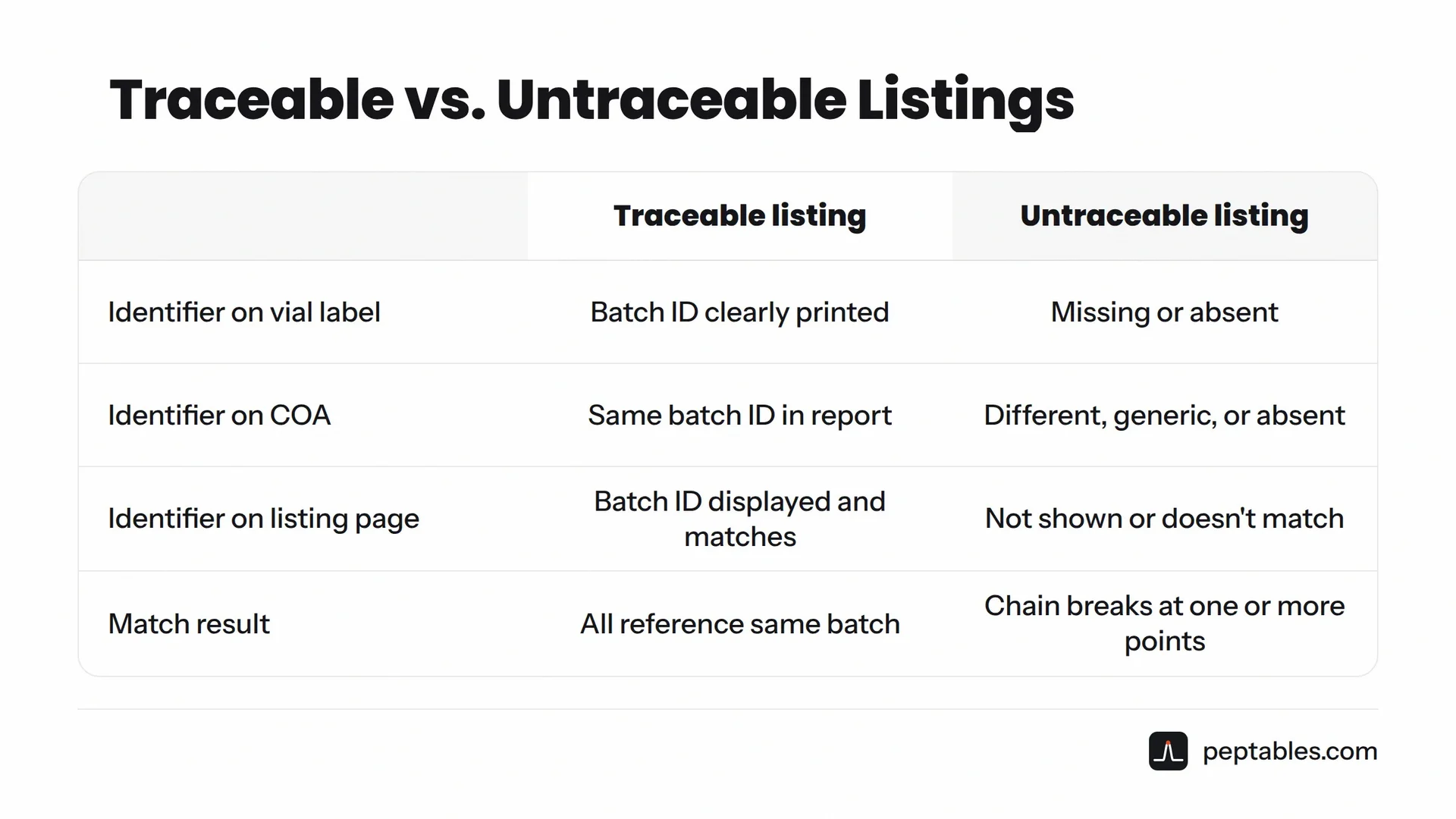
None of these patterns automatically mean a product is fake or unsafe. What they do mean is that a buyer has no documented way to confirm the test report describes their specific vial. That's the entire definition of untraceable: not necessarily "bad," but unverifiable.
| Check point | Traceable listing | Untraceable listing |
|---|---|---|
| Identifier on vial label | Batch ID clearly printed | Missing or absent |
| Identifier on COA | Same batch ID appears in the report | Different, generic, or no batch ID shown |
| Identifier on listing page | Batch ID displayed and matches both | Not shown, or doesn't match the COA |
| Match result | Vial, listing, and COA all reference the same batch | Chain breaks at one or more points |
Traceability vs Related Documentation Checks
Traceability is one piece of a larger documentation picture. A few related questions deserve their own full treatment rather than a shallow summary here.
- The distinction between a batch number and a lot number is a terminology question covered in a dedicated guide.
- Checking a vendor's practices end to end, beyond a single listing, is addressed in a guide on how to run a vendor traceability audit.
- Confirming that a COA itself hasn't been altered or fabricated, as opposed to confirming it matches a batch ID, is covered separately in a resource on checking whether a COA is authentic.
- The broader question of how openly a vendor discloses batch testing generally is addressed in a piece on how transparent batch testing is disclosed.
Keeping those topics separate isn't just tidiness. Traceability answers a narrow, mechanical question: does this identifier match that identifier? Authenticity, audits, and transparency tiers ask different questions that deserve their own depth.
One video worth watching alongside this resource looks at how to sanity-check whether a lab report itself is genuine, a related but distinct question from identifier matching:
How to Verify a Peptide COA | Is That Lab Report Authentic?
Frequently Asked Questions
What is a batch ID and where is it found on a vial?
A batch ID is a short alphanumeric code assigned to a specific production run of a peptide product. It's typically printed directly on the vial label, often near the product name and manufacture date. This same identifier should appear on the batch record and the COA for that run.
What is the difference between a batch record and a COA?
A batch record is the vendor's internal documentation describing a specific production run, including when it was made and what testing was performed. A COA (certificate of analysis) is the external document issued by a testing lab reporting the actual results of that testing. The batch record is the vendor's internal file; the COA is the evidence a buyer can read.
Can a listing be traceable without a published COA?
Not meaningfully. Traceability depends on being able to connect a batch ID to an actual test result. Without a published COA, there's a batch ID and possibly a batch record, but nothing independent to verify against. The chain stops short of a test report.
What does it mean when a batch number doesn't match the COA?
The documentation chain is broken at that point. The COA may be real and the testing may have occurred, but there's no way to confirm it describes the specific vial in question rather than a different batch. That's the core pattern behind an untraceable listing.
Where can I see real examples of batch IDs and COAs together?
The clearest way is to browse actual records rather than rely on illustrations.
Does a matching batch ID guarantee the product is genuine?
No. A matching identifier confirms the COA corresponds to the correct batch; it doesn't independently prove the COA itself wasn't altered, or that the lab performing the testing used sound methods. Those are authenticity and lab-credibility questions, addressed separately from traceability.
What role does the manufacture date play in traceability?
A manufacture date adds useful context, helping confirm how recent a batch is. However, it isn't a substitute for a batch ID. Two different batches of the same product could share a similar manufacture window; only the batch ID reliably distinguishes one specific run from another.
What should I do if I can't find a batch ID on a vial or listing?
Treat it as a documentation gap rather than guessing. If a vial, listing, or COA is missing a batch identifier, there's no reliable way to confirm the chain. That absence itself is useful information when evaluating a supplier's documentation practices.
The Bottom Line
Peptide batch traceability isn't a marketing feature a vendor turns on or off. It's a documentation property that either exists - because a batch ID genuinely connects a vial to a batch record and a COA - or it doesn't. Checking it takes a few minutes: look at the label, look at the listing, look at the COA, and see whether the same identifier shows up in all three places.
For context on how purity claims hold up in practice, Sam Miller's breakdown of research peptide purity testing offers a useful complement to the documentation-focused view here. It's a reminder that traceability and purity are related but separate questions.
Anyone who wants to practice this skill on real records can browse the peptide COA library and check batch IDs against their corresponding test reports directly. It's the fastest way to see the difference between a traceable listing and an untraceable one.